Problem
Medical record review is the slowest part of a healthcare litigation case. Teams read through a patient's records by hand to build a chronology of what happened and when, and a single case took roughly 40 hours.
What I built
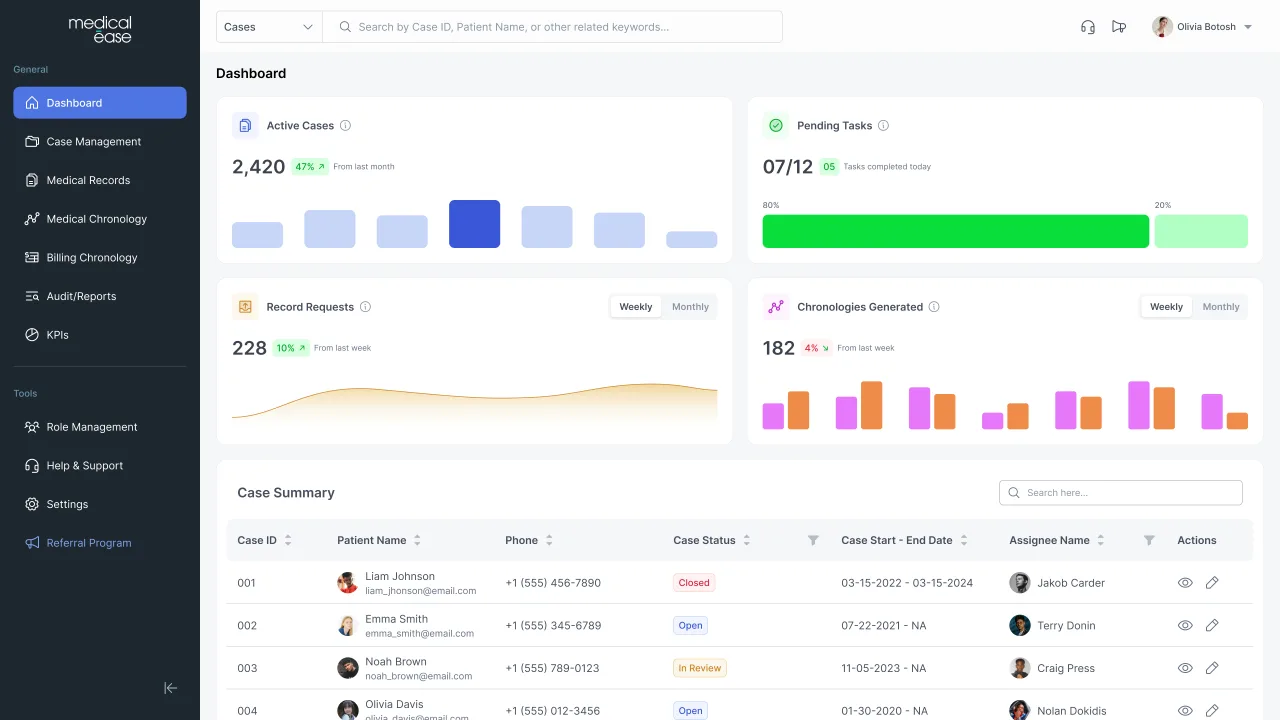
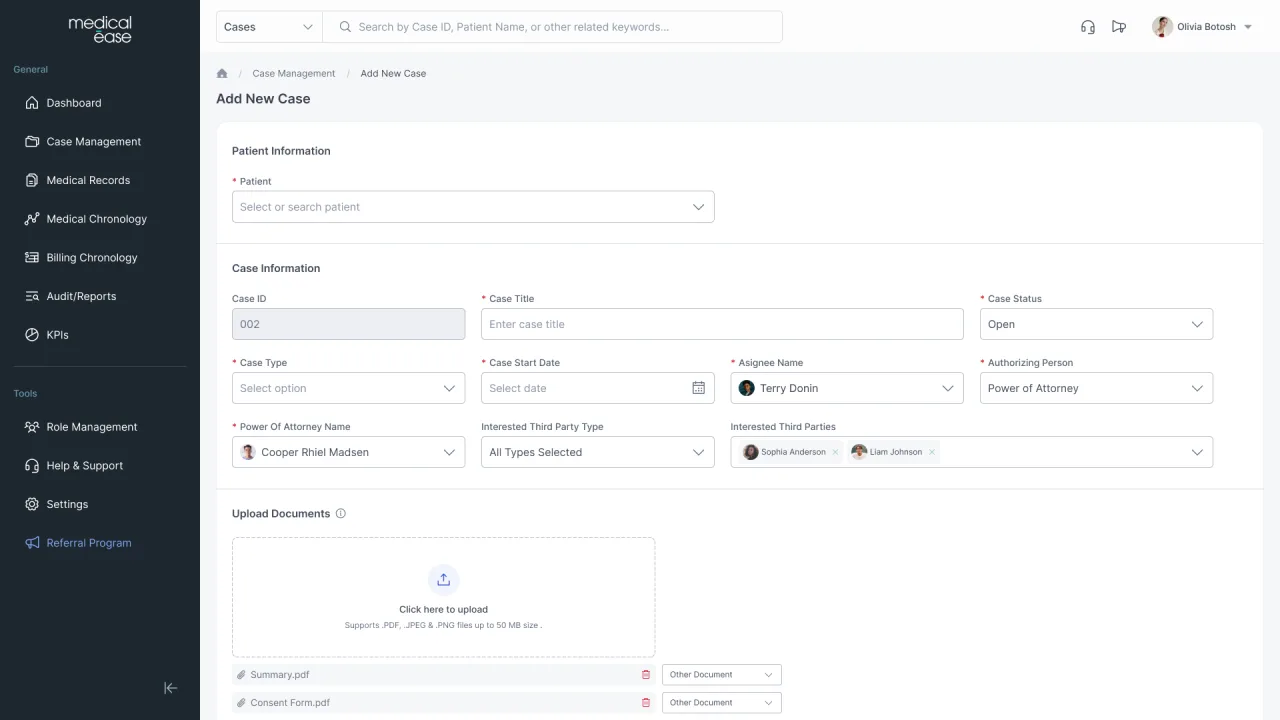
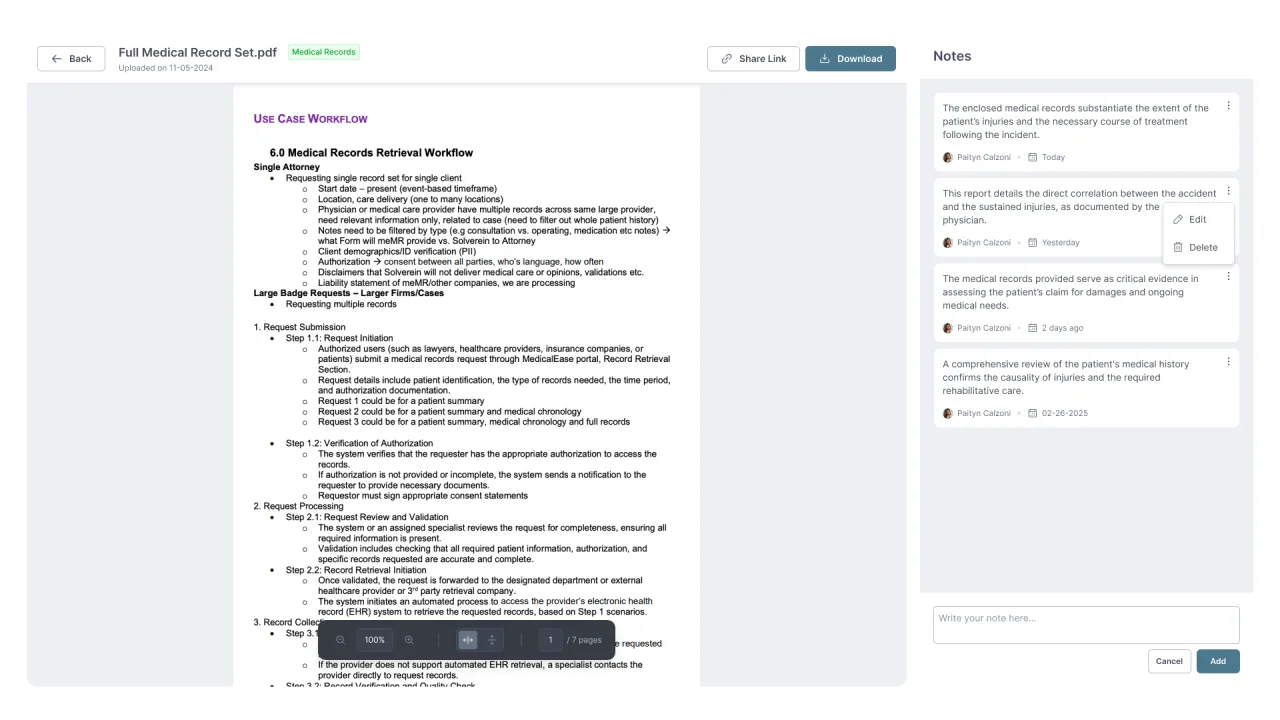
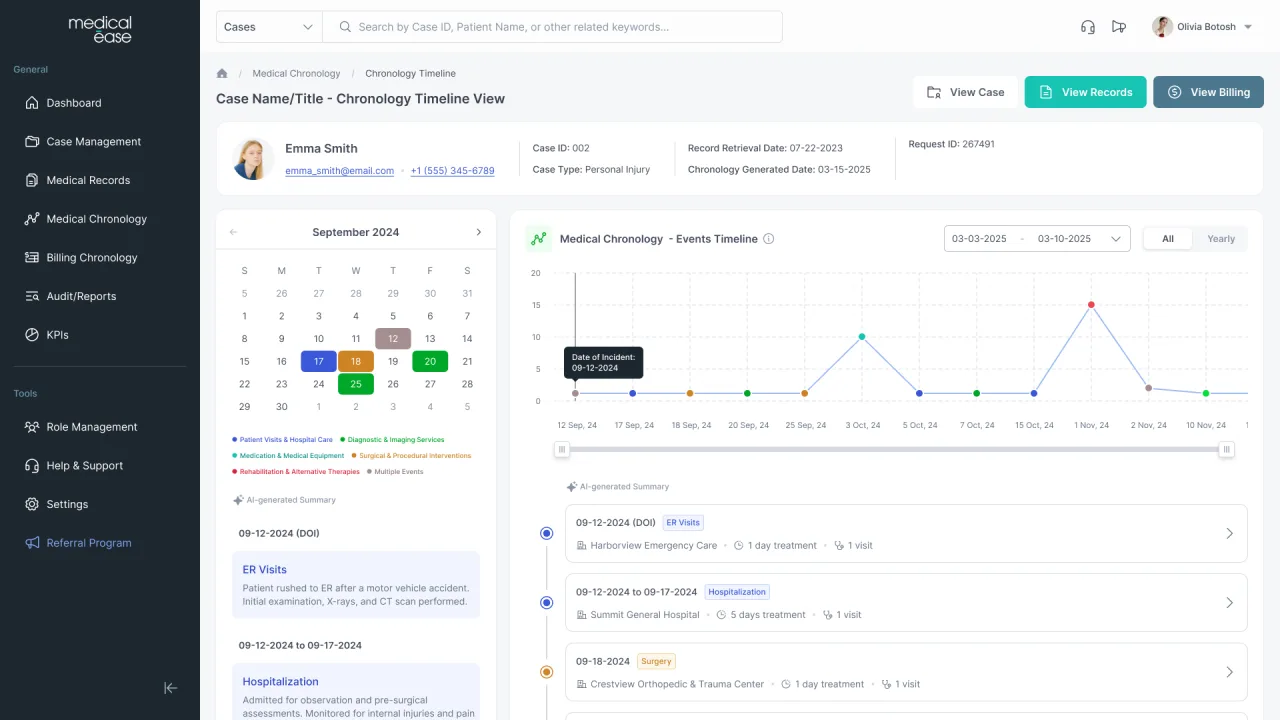
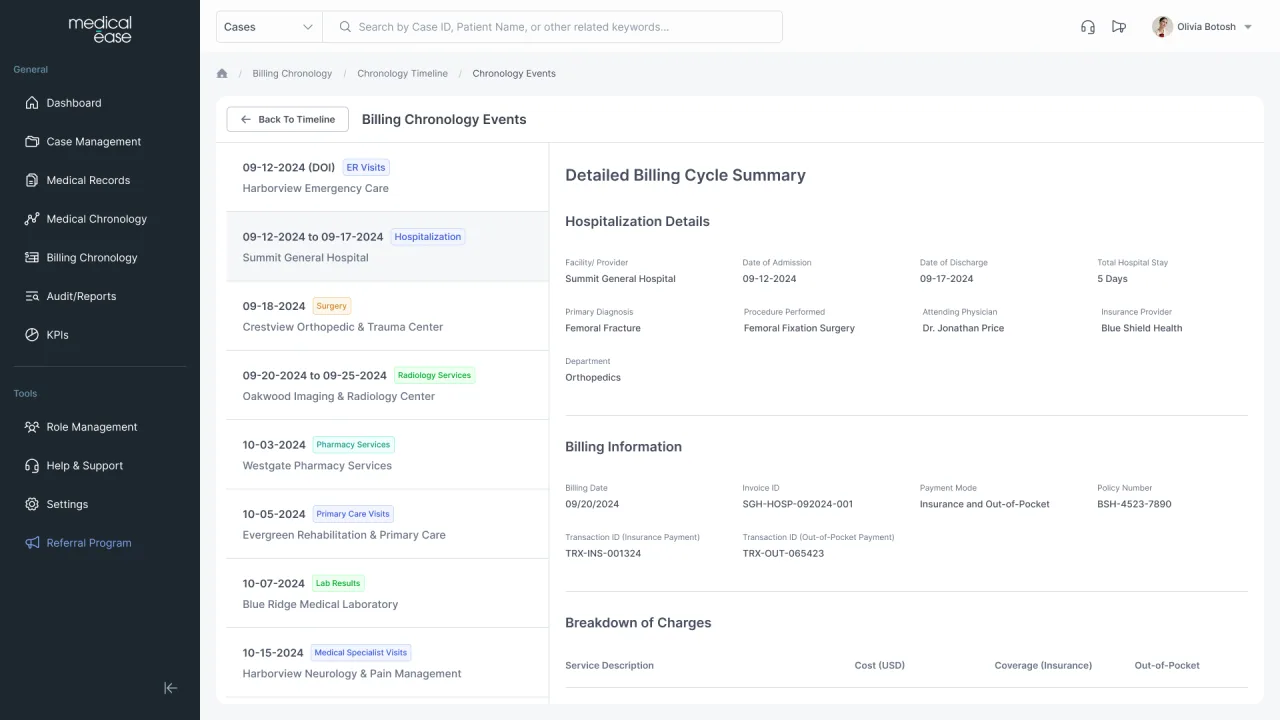
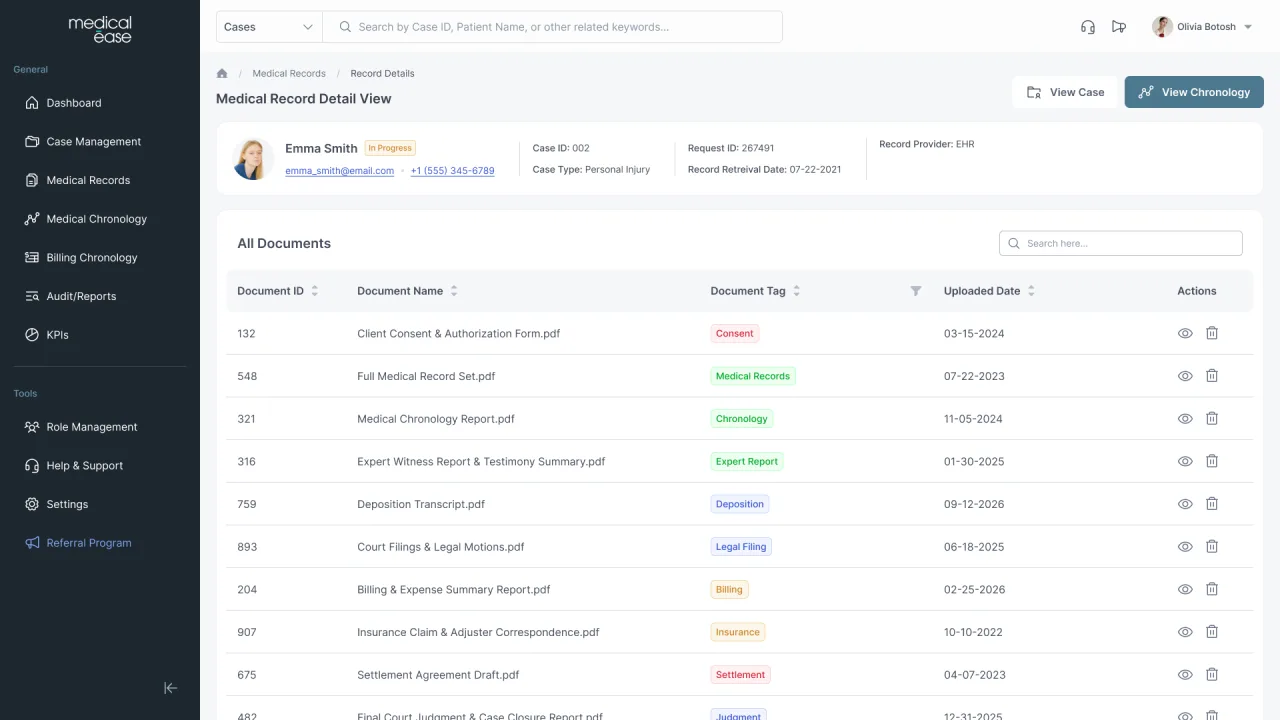
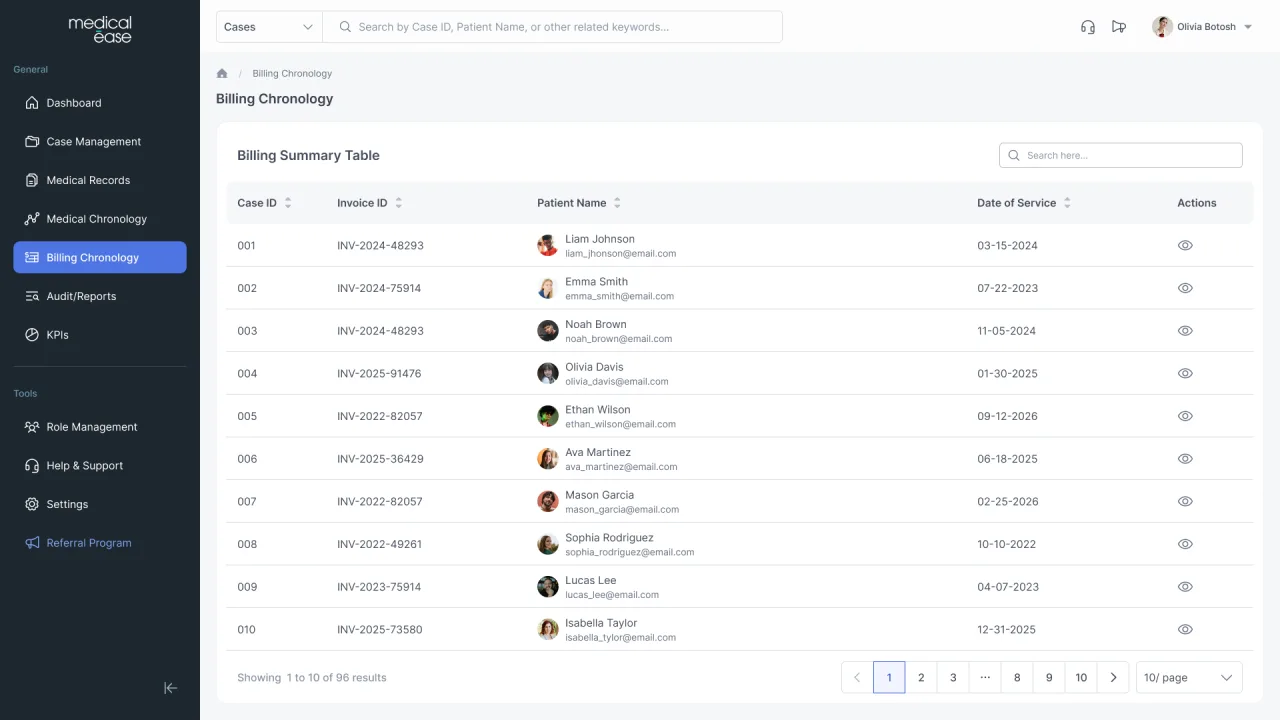
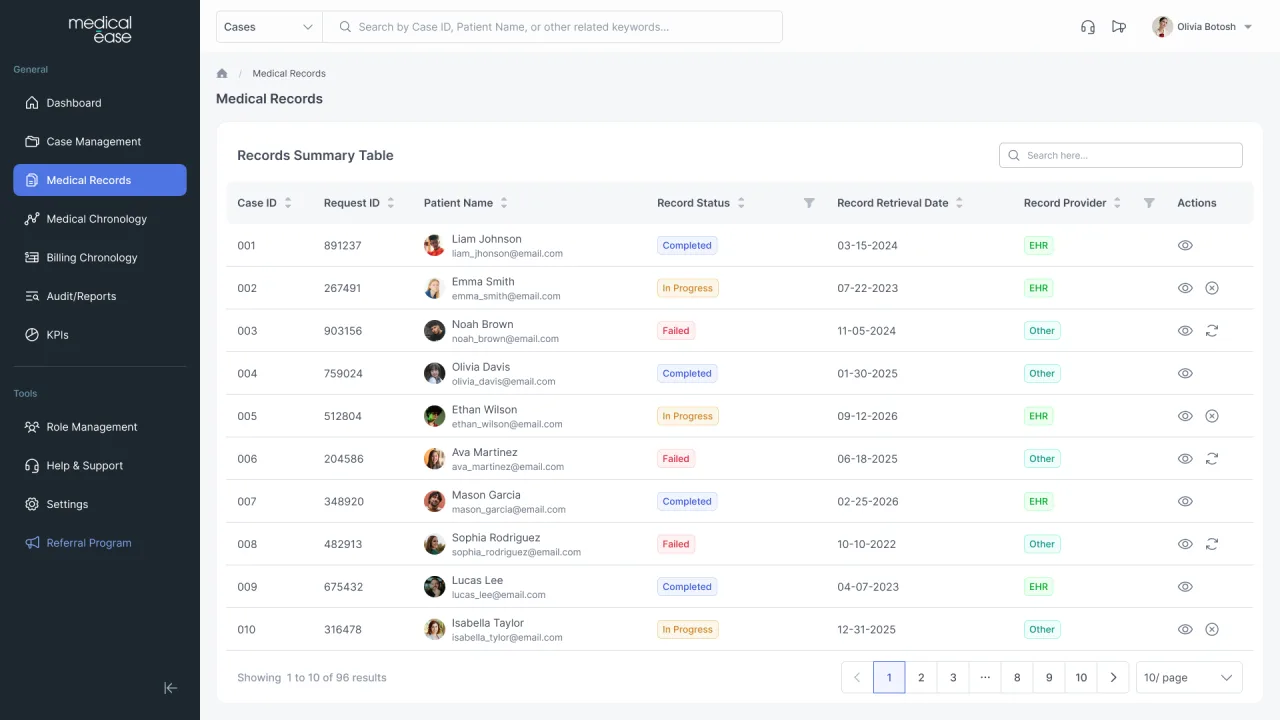
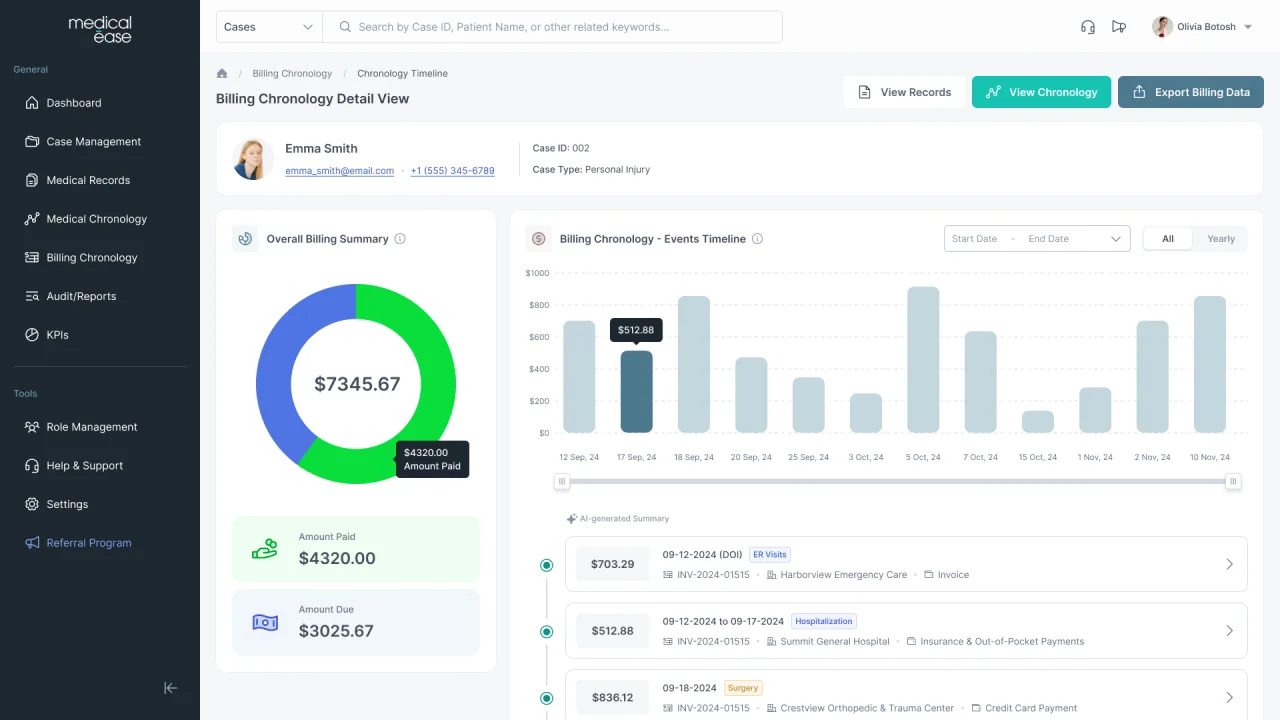
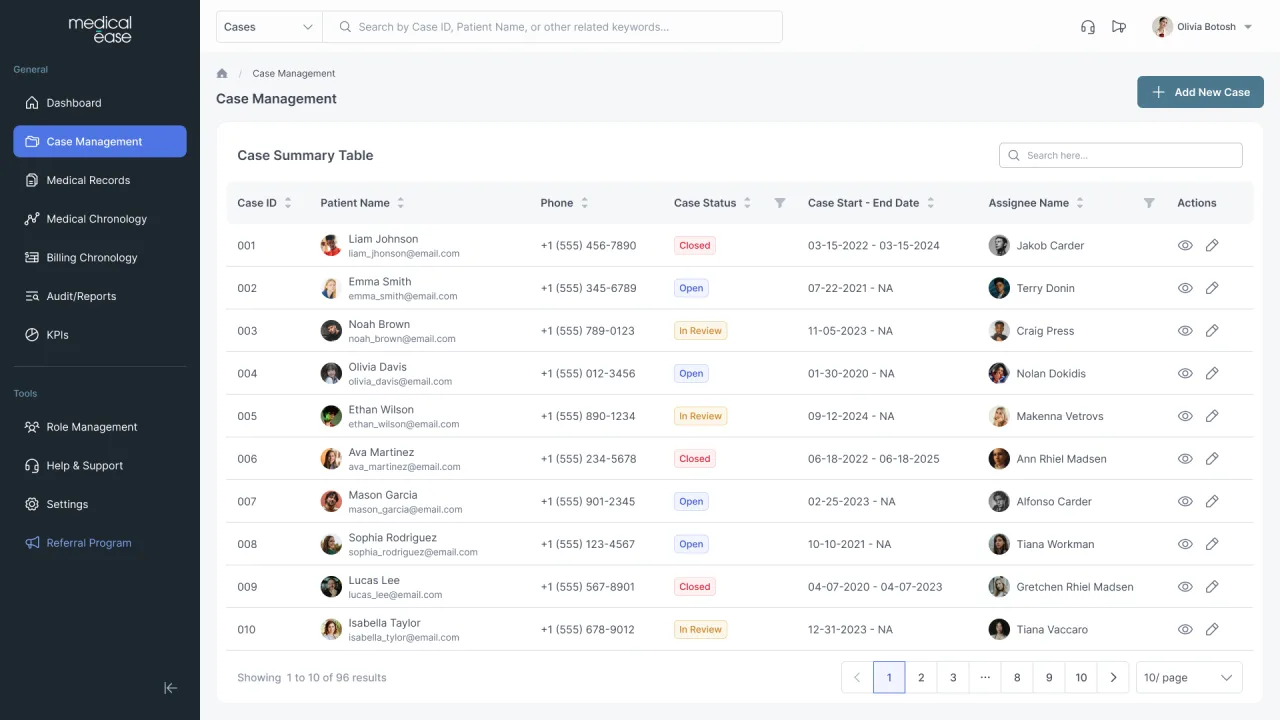
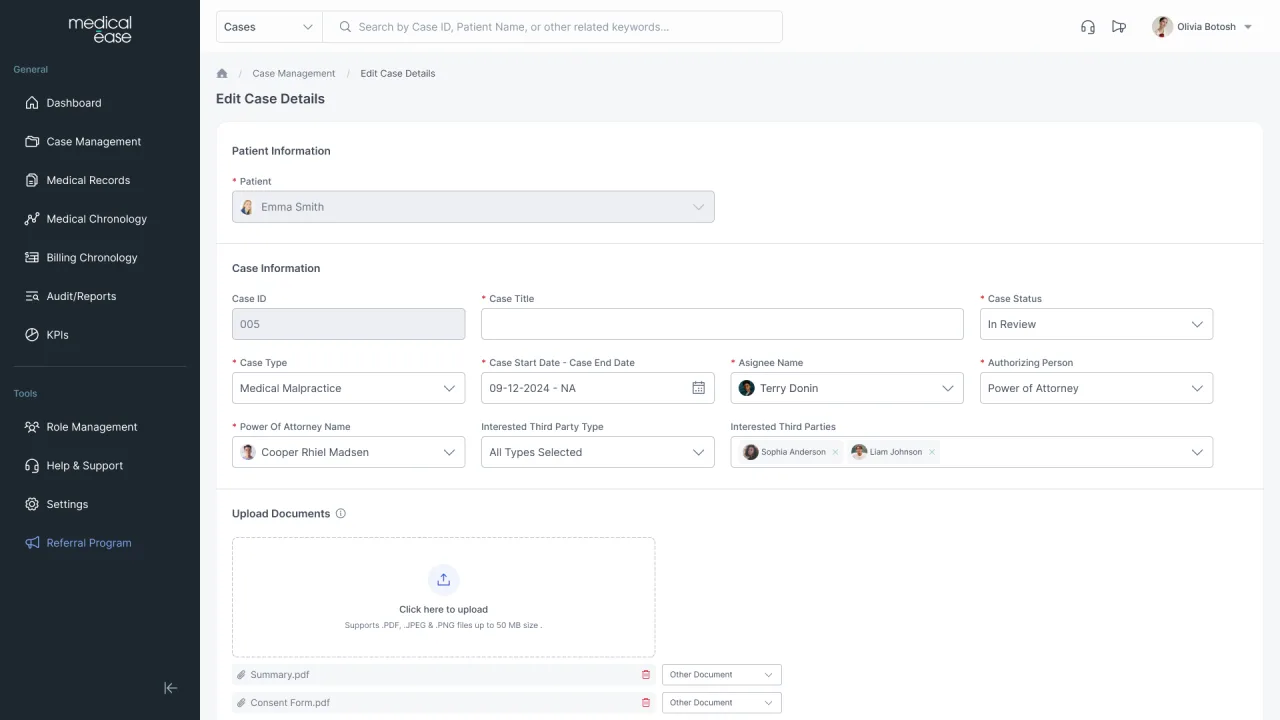
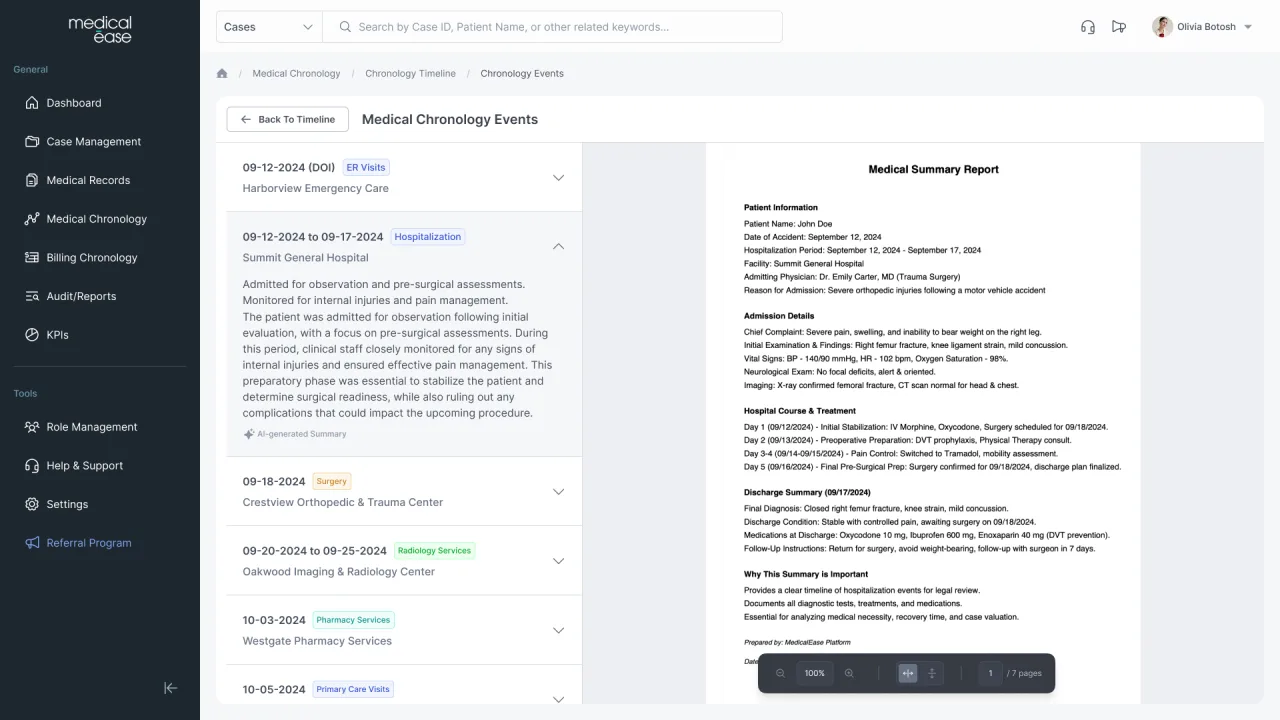
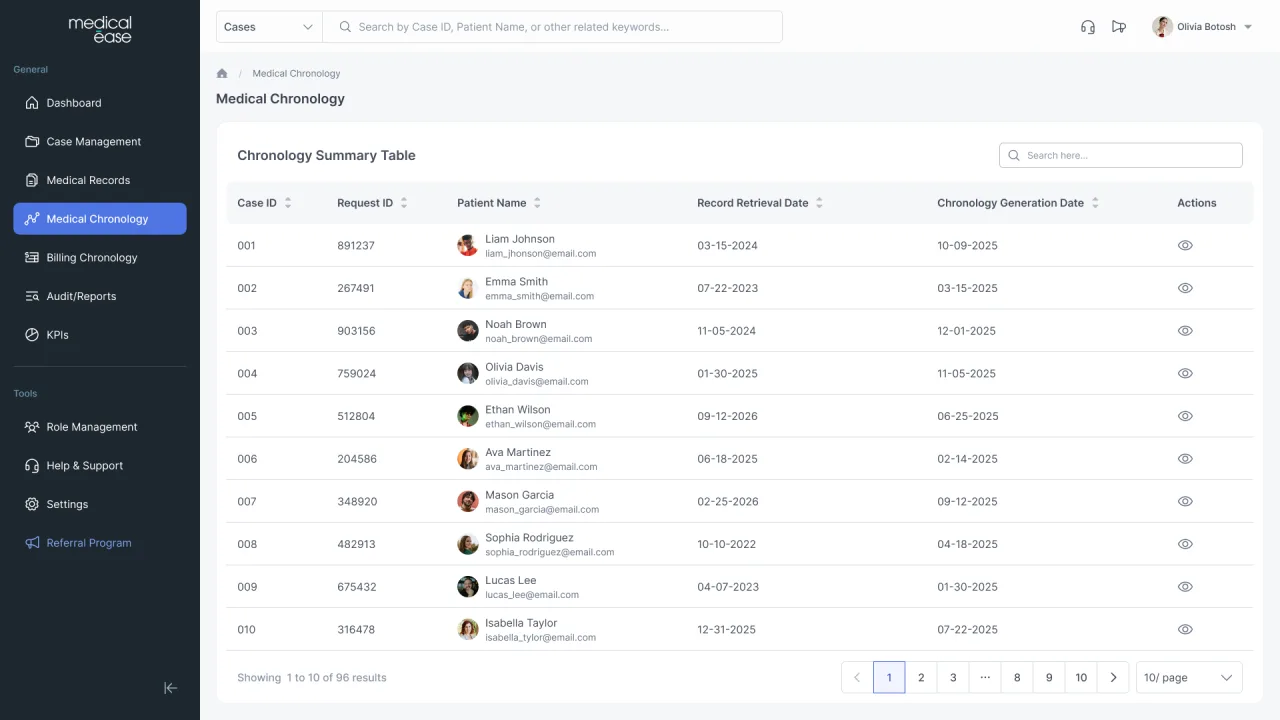
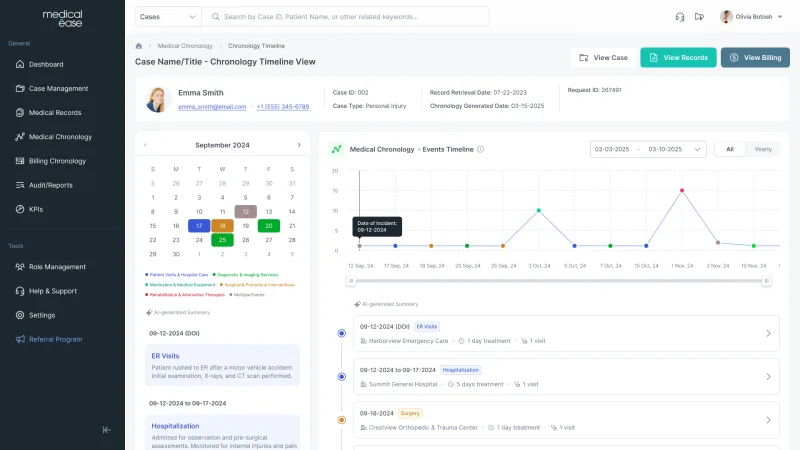
A web platform where the records go in and a chronology comes out. AI generates the medical chronology and an events timeline, summaries of each document stream in as they are produced, and the original PDF opens beside them with annotation panels so every statement can be checked against its source. Billing chronologies, record detail pages and case management sit around it. It runs across 2,400+ active cases.
Architecture and stack
A React 18 and TypeScript front end. TanStack Query handles server state, caching and refetching across the case, record and chronology views. AI output is streamed into the page as it is generated rather than waiting for a full response, and the chronology, PDF viewer and annotation panels live in one case workspace.
Outcome
Case review time cut from roughly 40 hours to 6 per case, across 2,400+ active cases.
Tracklist
- Case dashboard and case management
- AI-generated medical chronology and events timeline
- Streaming document summaries
- In-app PDF viewer with annotation panels
- Billing chronology and billing detail views
- Medical records and record detail pages
Credits
- Sector
- Healthcare litigation AI
- Role
- Senior Frontend Engineer, York IE
- Stack
- React 18, TypeScript, TanStack Query, AI/ML
- Outcome
- Case review time cut from roughly 40 hours to 6 per case, across 2,400+ active cases.